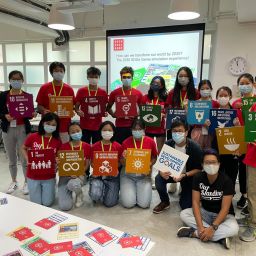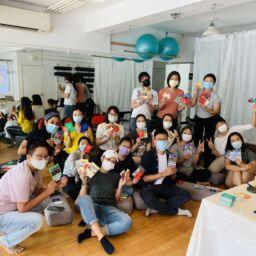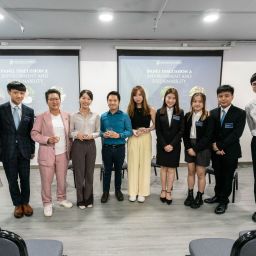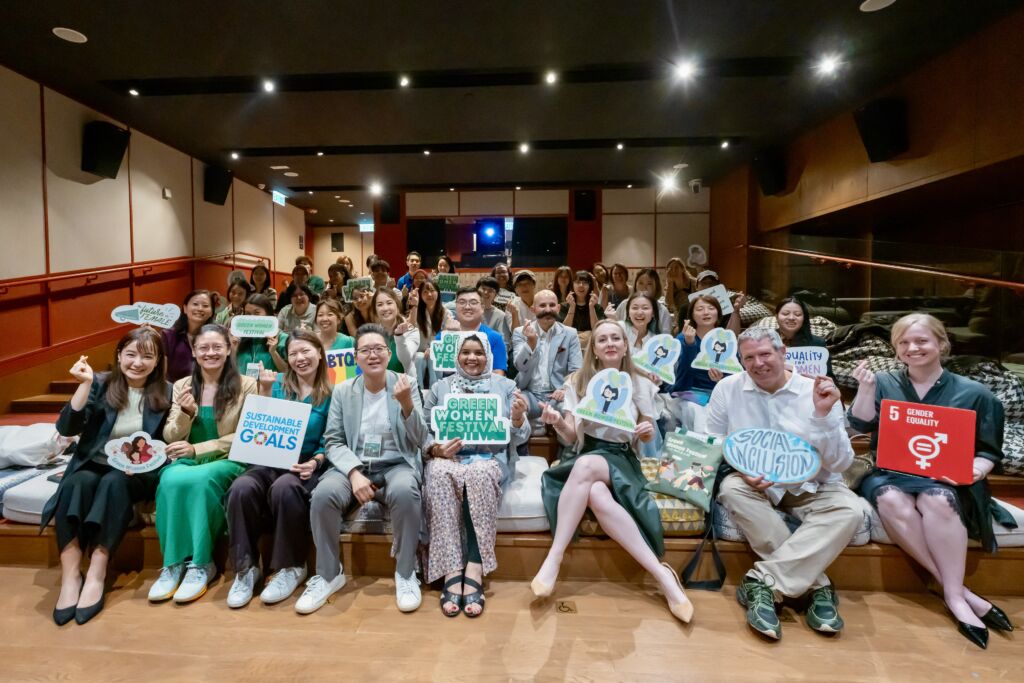
At the Green Women Festival 2026, Day 1 offered a refreshing reminder that sustainability conversations do not have to feel draining to feel serious. Instead of centring only warnings or urgency, the first day created space for ideas, creativity, and connection to sit alongside climate action in a way that felt grounded and intellectually alive. It moved fluidly from local biodiversity and sustainable travel to an evaluation of AI, food marketing to reduce animal suffering, and gender inclusive policy design, all without missing a beat. That breadth made the festival feel like a living conversation about how sustainability touches nearly every part of daily life.
One of the most memorable things was how the talks remained grounded in, and built by, the local community. Coral Puig Garrigo’s talk on the perception of alternative proteins brought in one of her students for a rich intergenerational discussion of why we make the choices we do regarding health and sustainability. Kelly Libarios’ heartfelt recounting of her personal experience with transitioning in the workplace shed light on work culture in Hong Kong and the effort that goes into carving out inclusive spaces. Wendy Chan’s compelling presentation, backed by visuals and data, made every single audience member think twice about their meat consumption and the animal suffering our society normalises. Cedric Delzenne’s talk on the benefits and pitfalls of AI when it comes to climate, on the other hand, was a sharp reminder that innovation is not automatically progress unless it is guided by values and care. The talks ran simultaneously with a series of workshops covering art, upcycling, and so much more. Alongside the talks and workshops were opportunities to learn about the work of numerous event partners through their booths, opening discussions with NGOs and social enterprises addressing a huge range of issues with the same goal of creating a sustainable society in every sense of the word. Much of the programme was also in Cantonese, reflecting a welcome effort to make sustainability more accessible to a wider audience, and were all focused on people’s lived experiences.
There was also a strong sense of movement, both literally and creatively. Dance performances, storytelling, and interactive elements gave the day rhythm and warmth. Prominent dirty recycling boxes and zero-waste speaker lanyards brought into practice the very ideas being discussed, grounding them in reality rather than remaining abstract. People were listening, but they were also connecting, reflecting, and laughing in the spaces between sessions.
Sustainability was not treated as a narrow technical issue. Instead, the Festival gave space to women’s leadership, allyship, and inclusion in a way that felt authentic rather than performative. It really showed that a greener future is not only about reducing harm, but also about expanding who gets heard, who gets supported, and who gets to shape the future in the first place. By the end of the day, the real success of the festival seemed clear: it created a space where environmental ideas were woven into everyday life. If the goal was to show that sustainability can be inclusive, practical, and energising all at once, the Green Women Festival really delivered.
About the Author
Sakshi Gupta works at the intersection of sustainability, human rights, and gender equity, with a focus on the ‘social’ in ESG and how big ideas translate to daily life. Working across NGOs and social impact consulting, her main focus is on human-centric storytelling and community. She writes regularly on workers’ rights, women’s rights, power, and everyday lives. She holds a BSc in Sociology from the LSE and has lived across Hong Kong, India, and the UK.